
A power of attorney form is an important legal document in which you can appoint someone you trust to act on your behalf in legal, financial or medical matters. Whether it is an emergency, a visit to another country or family matters, it is worth knowing how this document works. It can save you time, money and worry.
- What Is a Power of Attorney Form?
- Why Is a Power of Attorney Important?
- 1. Decreases emergency delays
- 2. Shields Against Financial Trouble
- 3. Helps Families Make Decisions
- 4. Offers Peace Of Mind
- Types of Power of Attorney Forms
- 1. General Power of Attorney
- 2. Durable Power of Attorney
- 3. Medical Power of Attorney
- 4. Limited Power of Attorney
- 5. Springing Power of Attorney
- How to Fill Out a Power of Attorney Form?
- Step 1: Choose a Trusted Agent
- Step 2: Decide What Authority to Give
- Step 3: Fill Out the Form Carefully
- Step 4: Sign According to State Laws
- Step 5: Share Copies
- Common Mistakes People Make
- When Should You Use a Power of Attorney Form?
- Can a Power of Attorney Be Cancelled?
- Online and Digital Power of Attorney Forms
- Conclusions
- FAQs
Legal documents are often considered difficult to read for many people. But, in simple words, a power of attorney form is really simple. This guide will help you understand what it is, why it is important, different types, how to fill it out correctly and mistakes to avoid.
What Is a Power of Attorney Form?
A energy of attorney shape is a felony document that allows another person to make decisions or do vital work to your behalf.
This document is intended to be used for the following:
- Control of bank accounts
- A bill-paying job
- Managing property deals
- Health care decision-making
- Signing of legal documents
- Running the business work
The authority can be short-term or long-term depending on your needs.
Why Is a Power of Attorney Important?
Life can change in the blink of an eye. Sometimes a person is not able to cope with important matters alone because of illness, accidents, travel or old age. With a properly filled power of attorney form, you can be sure that when you need help, a trusted person will be there to give you immediate assistance.
Some of the main benefits are the following:
1. Decreases emergency delays
If you can’t make decisions yourself, your appointed agent can help quickly without waiting for permission from the court.
2. Shields Against Financial Trouble
You can go on with bills, taxes, property and investments without any problems.
3. Helps Families Make Decisions
Family members can get confused in an emergency.” This document clarifies legal responsibility.
4. Offers Peace Of Mind
It is so much less stressful for you and your family knowing that you have a trusted person to look after your affairs.
Types of Power of Attorney Forms
Different kinds of authority suit different situations. You will see several different types of power of attorney forms for different purposes.
1. General Power of Attorney
He has broad powers to deal with financial and legal matters. The agent can perform many duties on behalf of the principal.
It is widely used to:
- Business administration
- Economic work
- Property Management
2. Durable Power of Attorney
A durable power of attorney form remains in effect if the principal becomes mentally or physically incapable of making decisions.
3. Medical Power of Attorney
This document allows a person to make health care decisions when the principal is unable to speak or give directions.
It also can contain:
- Treatment decisions
- Surgery permission
- Choosing care facilities
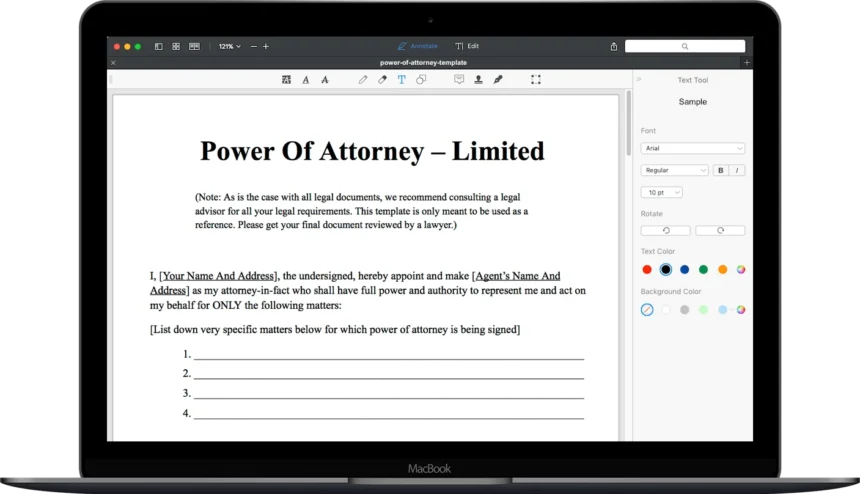
4. Limited Power of Attorney
A confined shape affords authority for an unmarried task or for a constrained time frame.
For example:
- Selling a house
- Managing a bank account while traveling
- Signing papers for one deal
5. Springing Power of Attorney
This type is only applicable to the case where a specific event occurs for example a severe illness or mental deficiency.
How to Fill Out a Power of Attorney Form?
It is very important that you fill out a power of attorney form correctly. Small mistakes can render the document invalid.
The fundamental steps are:
Step 1: Choose a Trusted Agent
Find someone who’s honest and accountable and may also make pinnacle choices for you.
This is probably:
- A husband or spouse
- A family member
- A friend
- A expert representative
Step 2: Decide What Authority to Give
Be unique in the powers you need your agent to have.
Ask yourself:
- Is power to be extensive or limited?
- Should healthcare decisions be included?
- Will the document be valid if I become incapacitated?
Step 3: Fill Out the Form Carefully
Include:
- Full names
- Addresses
- Specifically conferred powers
- From day to day
- Signature information
Step 4: Sign According to State Laws
Most states require that:
- Witnesses signatures
- notary acknowledgement
- Special language of the law
Always check local legal rules before you take the document to completion.
Step 5: Share Copies
Give to:
- Your agent.
- Family members
- banks or health care providers as appropriate
Store the original document in a secure but accessible location.
Common Mistakes People Make
There are lots of people who fill out a power of attorney form but make mistakes that cause problems later.
- Choosing the Wrong Person
- Giving Too Much Authority
- Ignoring State Rules
- Forgetting to Update the Form
- Not Telling Family Members
When Should You Use a Power of Attorney Form?
Many people think these forms are only for older adults, and that’s false.
Letter of attorney If you:
- Travel often
- Your own property
- Businessperson
- “Old parents.
- need to be protected immediately
- Needs medical attention
Legal protection can be helpful for young adults even in unexpected situations.
Can a Power of Attorney Be Cancelled?
The primary may additionally cancel the report at any time if they’re mentally able to make selections.
To opposite it:
- Write a revocation observe
- Inform the agent straight away
- Tell banks or other establishments
- Destroy old copies if feasible
Maintaining cutting-edge records avoids criminal issues.
Online and Digital Power of Attorney Forms
Today many websites provide legal forms that you can download. Online forms can be a money and time saver, but be careful.
Before filling out any online form:
- Make sure it’s within state laws
- Read all instructions carefully
- Check Notarization Requirements
- use reputable legal sites
A poorly written document may be rejected by law
Conclusions
A power of attorney form is a powerful legal tool that will safeguard your money, health care decisions, and personal affairs. It lets trusted people act for you when needed and avoids delays and legal issues.
The key to success is to select the right person, know the authority you want to delegate and follow legal guidelines scrupulously. It is better to be prepared earlier than an emergency than to be stuck unprepared in an emergency.
FAQs
Q1. Who can make a power of attorney?
Any adult with mental capacity can create a power of attorney. The person must know completely what authority they are giving.
Q2. Does a power of attorney expire?
Yes, some types may expire depending on the written terms. Generally a limited power of attorney expires after a certain task or date, but a durable power of attorney continues until revoked or until death.
Q3. Can a power of attorney make health care decisions?
Yes, if the file consists of healthcare authorities. The clinical energy of lawyer shape gives the agent the authority to make remedy and fitness care decisions while the primary is unable to communicate.
Q4. Can family members revoke a power of attorney?
As a rule, family members can not cancel a valid power of attorney form except when they can show misuse or challenge it in court.
Q5. Can you pick more than one character to be an agent?
Yes, you can choose more than one agent. The doc would possibly allow them to paint collectively or one by one, based on your instructions.


