
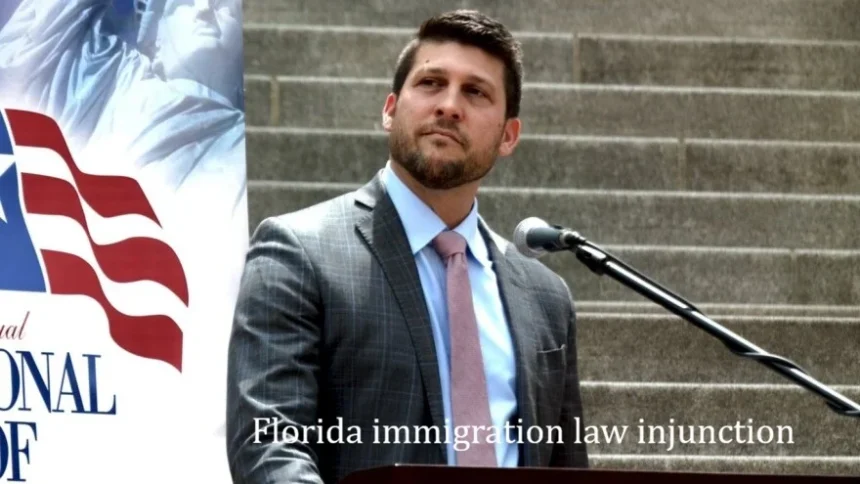
The florida immigration law injunction on hold, preventing the state from enforcing its new immigration law SB 4-C. The law criminalized illegal immigrants entering or remaining in Florida. The ruling means the law can’t be applied for now.
- What is the Florida immigration law injunction?
- Why did the court defer the injunction?
- Background of the Florida immigration case
- Impact of the injunction on communities
- Political reactions and debate
- What happens next in the case?
- Broader national impact
- Conclusion
- FAQs
- Q1. What is the injunction on the Florida immigration law?
- Q2. How did the courts rule on the Florida immigration law?
- Q3. Does the injunction die?
- Q4. Does Florida, nevertheless have the strength to put into effect legal immigration guidelines?
- Q5. What is the next step in this case?
- Q6. What are the implications for immigrants in Florida?
The injunction against Florida’s immigration law is a hot topic in legal and political circles. There is a lot of talk now about state power versus the federal government on immigration. We talk about the implications of the injunction, why the court stopped the law and what it means for Floridians.
What is the Florida immigration law injunction?
What is the florida immigration law injunction? The Florida immigration law injunction is a federal judge’s order temporarily preventing Florida from enforcing SB 4-C.
The law was intended to criminalise illegal entry and presence in Florida. But the court said the law may conflict with federal immigration laws.
The injunction prohibits Florida officials from arresting, detaining, or charging people under the law while the case is pending in court. An injunction is a brief order until the judges make a final decision.
Why did the court defer the injunction?
Judges assume the Florida immigration law injunction should violate the US.
- Immigration laws are a federal issue, not a state issue.
- Judges say SB 4-C might violate
- U.S. Constitution Supremacy Clause
Federal immigration laws Immigration and Nationality Act interstate travel and movement between states regulations
The court also said the law could interfere with federal immigration decisions such as detention and deportation.
Background of the Florida immigration case
Immigrant rights groups and others who felt SB 4-C went too far for the state.
The groups said the law could be used to falsely arrest people. A federal judge in Miami has issued a temporary restraining order. That order was later expanded to an injunction against the law.
The injunction on the Florida immigration law remains in effect while appeals and court reviews are pending. Florida officials said the law was needed to help with immigration enforcement. But the courts have continued to explore whether states can create their own immigration crimes.
Impact of the injunction on communities
The injunction on the Florida immigration law has had a direct impact on immigrant communities across the state of Florida. Many who feared arrest under SB 4-C get momentary relief.
Some of the major effects are:
- Fear of being arrested by immigration officers diminishes
- Most immigration enforcement remains federal
- Temporary protection for undocumented migrants
- Uncertainty ongoing, active case
Community groups say the injunctions have made people feel safer and more comfortable in their neighbourhoods. But for many families there is still anxiety as the court deliberates its final decision.
Political reactions and debate
Injunction against Florida immigration law injunction politics arguments strong enough to warrant the injunction. Advocates of the bill argue that states should be able to take a greater role in enforcing immigration laws, especially if they believe the federal government is not doing enough.
Opponents say immigration policy should be a federal responsibility so laws are consistent and fair across the country. It is a mixed bag. Some residents want stricter immigration laws others worry about civil rights and constitutional issues.
What happens next in the case?
Appeals continue in federal court, so the fate of the Florida immigration law remains uncertain.
The case also could go to the 11th Circuit Court of Appeals and the U.S. Supreme Court.
Possible outcomes are the following:
- SB 4-C struck down, injunction made permanent
- The injunction is lifted, and Florida can enforce the law.
- Immigration power of states in court: Supreme Court to decide
The law will remain blocked until a final ruling.
Broader national impact
The injunction against the Florida immigration law could affect the way future immigration laws are written in other states. If SB 4-C is permanently struck down in the courts, other states may be less likely to pass similar laws.
If the higher courts uphold Florida’s law, other states may try to pass their own immigration enforcement policies. That makes the case significant not only for Florida but also for immigration policy across the United States.
Conclusion
The Florida immigration law injunction is a major judicial decision that has temporarily blocked the state from enforcing SB 4-C. The courts say the law should violate federal immigration authority; however, the last court docket selection is still pending.
For the moment, this law shields immigrant communities from enforcement. But the legal battle continues. The case could echo for years in state powers and immigration laws in the United States.
FAQs
Q1. What is the injunction on the Florida immigration law?
The Florida immigration law injunction is a federal court order that temporarily halts the state’s enforcement of its immigration law SB 4-C.
Q2. How did the courts rule on the Florida immigration law?
The court said the regulation should violate the U.S. Constitution due to the fact the federal authorities have vast authority over immigration enforcement.
Q3. Does the injunction die?
No. The injunction on Florida’s immigration law is temporary as the case makes its way through the courts.
Q4. Does Florida, nevertheless have the strength to put into effect legal immigration guidelines?
Florida can simply put into effect immigration laws that do not battle with the authority of the federal government on immigration. SB 4-C is at an impasse.
Q5. What is the next step in this case?
The case will be appealed and could reach the US Supreme Court.
Q6. What are the implications for immigrants in Florida?
The injunction temporarily bars the arrest and prosecution of immigrants under SB 4-C.


