
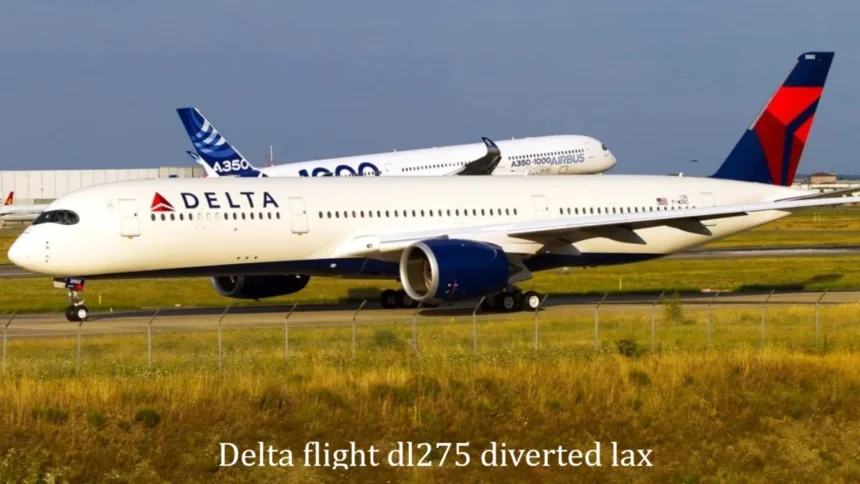
Plane travel is one of the safest ways to travel. Technical problems can still crop up on long flights though. News of the incident spread like wildfire among travelers and aviation experts around the globe and Delta flight dl275 diverted lax became a buzzword.
- Overview of Delta Flight DL275
- What Caused the Diversion?
- Why Los Angeles International Airport Was Chosen
- How the Crew Handled the Situation
- The Role of Aircraft Safety Systems
- Can Technology Prevent Similar Incidents?
- What travellers can learn from this event
- Safety Comes First
- Diversions Are Often Precautionary
- Large airports give better support.
- Crew Training Is Important
- Passenger Experience After Landing
- Conclusion
- FAQs
The flight was a normal international flight but the pilots later found a technical problem in flight. The pilots opted to land safely at Los Angeles International Airport (LAX) instead of continuing on to the Pacific Ocean.
The safe landing demonstrated the functioning of today’s airplane safety systems in real emergencies although it caused delays and changed travel plans for passengers. This article will discuss what occurred, why the plane was diverted, why LAX was selected, and what passengers can learn from this incident.
Overview of Delta Flight DL275
Delta Air Lines Flight DL275 is a scheduled international flight from Detroit Michigan to Tokyo. Usually the route is operated by the airlines Airbus A350-900.
The Airbus A350 is known for its modern and fuel-efficient, passenger-friendly design. It is often used on very long international flights because it has advanced technology and strong safety systems.
The flight had left Detroit normally on the day of the incident. Passengers had expected a smooth trip to Tokyo. But at high altitude over the Pacific area the pilots noticed a problem with the engine anti-ice system.
What Caused the Diversion?
Trouble was with the engine anti-ice system, reports said. This system is very important because planes fly at high altitude in very cold temperatures. Ice can form on engine parts and can affect the operation of the aircraft.
The anti-ice system prevents dangerous ice from forming on critical engine parts. When the pilots received unusual caution signs associated with this system they promptly followed safety procedures.
Pilots are trained to take all warnings seriously though it is not an immediate emergency. Without an anti-ice system that works properly crossing the Pacific Ocean would be more dangerous on the long trip.
So the pilots decided not to go on to Tokyo. They instead safely diverted the plane to Los Angeles International Airport.
Why Los Angeles International Airport Was Chosen
Many asked why the plane landed in Los Angeles instead of returning to Detroit or landing in some place like Alaska. Most of it is a safety maintenance support and passenger help question.
Strong Maintenance Support
LAX is one of the worlds busiest and largest airports. It has big maintenance facilities and skilled engineers to check big international aircraft like the Airbus A350.
This allowed the airline to inspect the aircraft more easily after touchdown.
Better Passenger Help
Another reason for delta flight dl275 was the ease for the passengers. There are many international flights out of LAX to Asia including Tokyo. This gave Delta more flexibility to quickly rebook passengers.
Emergency Services
Big airports like LAX also have able emergency response teams and long runways as well as well-trained ground crews. These make them good candidates for precautionary landings.
For these reasons Los Angeles was the safest and most practical airport to divert to.
How the Crew Handled the Situation
One of the best parts of this event was the calm and professional work of the pilots and cabin crew.
Passengers said the flight attendants remained calm and provided clear information during the flight. The pilots informed passengers of the diversion and said the landing was purely a precaution.
Good communication is one of the most important things when it comes to stressful travel situations, because it helps to calm passengers down. Many travelers later said they were grateful for the way the crew handled things.
The aircraft landed safely and emergency teams were on standby at LAX as part of normal airport safety procedures.
Safe Handling The safe handling of delta flight dl275 diverted lax demonstrates how important pilot training and emergency preparation are in aviation.
The Role of Aircraft Safety Systems
Today’s planes have sophisticated computers that continuously monitor engine performance, fuel systems, weather and mechanical parts.
These systems can detect small problems before they become serious dangers. In this case the anti-ice warning provided the pilots the opportunity to take early action rather than wait for the situation to deteriorate.
Also notice how airlines take preventative safety actions instead of waiting for a real emergency. The incident with delta flight dl275 diverted lax .
Can Technology Prevent Similar Incidents?
Many airlines are today implementing predictive maintenance systems and artificial intelligence. These systems analyze data from aircraft and can detect possible problems prior to a flight even taking off.
A system that detects a problem in time means maintenance teams can fix it before passengers get on the plane. That could help airlines in the future prevent delays cancellations and diversions.
What travellers can learn from this event
Getting rerouted is never fun, especially if you are on a long international trip. But moments like this remind travelers that detours are largely for safety’s sake.
A few key lessons for the traveler are:
Safety Comes First
Airlines always put passengers’ safety first. Even minor technical problems are checked thoroughly.
Diversions Are Often Precautionary
Not every diversion was a sign the plane was in serious trouble. Sometimes pilots choose the safest option before the problem gets bigger.
Large airports give better support.
Big airports like LAX have maintenance crews passenger services and many more international flights to help travelers keep going on their journey.
Crew Training Is Important
Both pilots and flight attendants have special training for the unexpected. Their calm demeanor puts passengers at ease.
Passenger Experience After Landing
Delta staff assisted passengers with their travel plans as the plane landed at LAX. Depending on their tickets and schedules some travelers were offered hotel rooms, meals or new flights to Tokyo. Of course there were going to be delays but lots of people commended the airline for its commitment to safety.
A long diversion, for example is a problem if you have a business meeting or a connection but most passengers realize that safety is the priority. The delta flight dl275 incident exemplifies how airlines handle travel disruptions while prioritizing the safety of passengers and crew members.
Conclusion
The delta flight dl275 diverted lax incident proves that airplane safety is about vigilant observation quick decisions and trained crews.
The disruption of many travel plans by the diversion was a reminder of how well modern aviation safety systems can respond to technical problems with a safe landing at Los Angeles International Airport.
The whole aviation safety system, from advanced aircraft technology to highly trained pilots, came together in this event. The biggest takeaway for travelers is simple: diversions are not failures. These are the sorts of safety systems that are supposed to work this way.
FAQs
Q1. Why was Delta Flight DL275 diverted to LAX?
Delta Flight DL275 was diverted to Los Angeles International Airport due to a technical problem with the aircraft’s engine anti-ice system the pilots said. For safety reasons the diversion was implemented.
Q2. Was Delta Flight DL275 in danger?
There were no reports of any immediate threat to passengers or crew members. But on long flights pilots always take technical warnings seriously.
Q3. Why did the flight land at LAX instead of returning to Detroit?
It was chosen because of its strong maintenance facilities emergency services and many international flight connections.
Q4. Were any passengers injured during the diversion?
No injuries were reported. “The aircraft was landed safely and passengers assisted safely on landing.
Q5. What is an engine anti-ice system?
The engine anti-ice system prevents the build-up of ice on key engine parts when flying at very high altitudes in very cold conditions.


